

McLaren rule out building own power unit, committed to Mercedes until 2030
Zak Brown says McLaren have no plan to build their own power unit for F1's next engine rules and remain Mercedes customers until 2030, while Andrea Stella admits the customer role cost them in integration this year.
· 3 min read
In brief
- Zak Brown says McLaren have no plan to build their own F1 power unit.
- The Mercedes customer deal runs until 2030.
- Andrea Stella says the customer role left McLaren behind in power unit and car integration.
- McLaren bring a new floor to the Las Vegas Grand Prix and are 17 points behind third-placed Red Bull.
No engine project planned at Woking
McLaren have no intention of designing their own power unit for Formula 1's next engine regulations. CEO Zak Brown told the Sky F1 podcast: "There's no plan", as reported by RacingNews365.
The team have been Mercedes High Performance Powertrains customers since the current rules began, and the deal runs to 2030. Williams and Alpine are also supplied by the German manufacturer.
The subject has taken on fresh relevance because F1, the FIA and the manufacturers want to bring a 2.1-litre turbocharged V8 formula forward by a year, to 2030. Brown reckons that, "whether we wanted to or not", there would not be enough time to prepare, so McLaren are keeping a watching brief for now.
Brown pointed to Red Bull and Aston Martin as contrasting examples. Red Bull launched their in-house engine project with Ford backing for 2026. Aston Martin, since switching to a works Honda power unit, have wrestled with packaging and vibration problems that severely limited their early-season running. Brown is not sure the risk is worth the reward when championships can be won with Mercedes, and he feels McLaren's two titles have put the "you can't win with a customer engine" argument to bed.
Stella: the price of being a customer
Team principal Andrea Stella spoke with more nuance to La Gazzetta dello Sport. He said being a customer team left McLaren a little behind in integrating the power unit with the car, because Mercedes' priority was delivering a reliable and competitive engine of their own. He stressed he was not looking to cause a row. Mercedes had reliability problems early on too, while McLaren lined up with neither car in China, where RacingNews365 says hybrid battery problems played a part.
Stella is optimistic about 2027. He says McLaren have a clear plan and a more precise idea of what to expect from the cars, and that patience and not burning bridges with partners were key (PlanetF1).
Background: where the season stands
After round 20, Andrea Kimi Antonelli leads the drivers' standings on 390 points from Max Verstappen (279) and George Russell (262). Lando Norris is sixth on 246 and Oscar Piastri seventh on 152. In the teams' table, Mercedes top the order on 652, ahead of Ferrari (510), Red Bull (415) and McLaren (398).
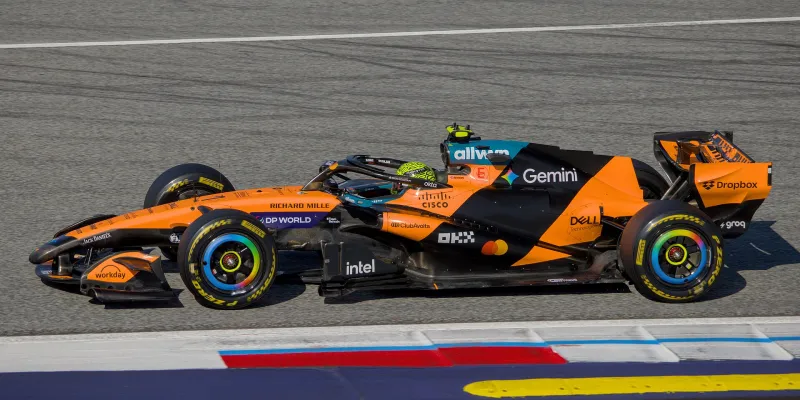
PlanetF1 states that Antonelli is set to become the sport's youngest world champion and that Mercedes have secured the constructors' crown. McLaren have won three grands prix with Norris, the latest in Brazil with the new MCL40.
What does this mean?
McLaren are therefore tied to Mercedes until 2030, with their focus on laying the foundations of the 2027 car. The present picture is not easy, with McLaren 17 points behind third-placed Red Bull.
At the Las Vegas Grand Prix (20–22 November, round 21) a new floor arrives, and PlanetF1 says the team will also run Mercedes' ADUO-upgraded turbocharger, though the gain is expected to be small.
- 2030
- end of the Mercedes deal and planned start of the V8 rules
- 17 points
- McLaren's gap to third-placed Red Bull
- 3
- grand prix wins with Lando Norris
- 2.1 litres
- capacity of the proposed turbocharged V8 formula
Paddox poll
Is McLaren right not to build their own engine?
Enjoyed it? Share it!
Sources
- McLaren address Mercedes partnership for next F1 power unit regulations (RacingNews365)
- McLaren sets F1 2027 mission with Mercedes power unit plan set (PlanetF1)
This article was produced with the help of artificial intelligence, based on the sources listed. How we work
Comments
Comments are reviewed by automated moderation every four hours; anyone can report unlawful content. Rules